Key Takeaways
- Residential properties in Lafayette generally do not require a permit for tree removal unless the tree is in a public right-of-way or a historic district.
- Commercial sites must follow strict landscape mitigation rules under the Unified Development Code (UDC), often requiring permits for any significant clearing.
- Trees located in the verge (between the sidewalk and the street) are city property and require LCG Public Works authorization for any work.
- Historic districts like Sterling Grove may require a Certificate of Appropriateness before removing mature trees to preserve the neighborhood’s character.
- Fines for unauthorized removal of public or protected trees can be substantial, making professional arborist consultation essential.
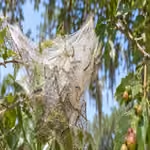
Few things define the soul of Hub City quite like our canopy. From the sprawling century-old Cathedral Oak to the shaded residential streets of Saint Antoine and Freetown, trees are woven into the very fabric of Lafayette, Louisiana. However, as properties evolve and trees age, there comes a time when a tree is no longer an asset but a liability. Whether it’s a pine leaning precariously over a fence or an ash tree ravaged by pests, the question most homeowners ask in 2026 is:
Do You Need a Permit?
To directly answer the question: In most residential cases, no, you do not need a permit to cut down a tree on your own private property in Lafayette. If the tree is entirely within your property lines and you are a single-family homeowner, the Lafayette Consolidated Government (LCG) typically considers tree maintenance and removal a private matter. You are free to remove dead, diseased, or unwanted trees to make way for home improvements or to ensure safety. However, there are several red flag scenarios where the answer changes to a firm yes. If you ignore these exceptions, you could face stop-work orders or heavy fines from the city.
When is a permit required in Lafayette, LA?
While residential backyard trees are usually fair game, several specific conditions trigger the need for official city or neighborhood approval:
- Public Right-of-Way (Street Trees): If the tree is located in the grass strip between the sidewalk and the street, it is technically on city-owned land. Even if you are the one who waters it, you cannot prune or remove it without a permit from LCG Public Works.
- Commercial Properties: Under the Lafayette Unified Development Code (UDC), commercial landscapes are strictly regulated. Businesses are often required to maintain a certain tree density or canopy cover. Removing trees on a commercial lot usually requires a Landscape Amendment or a specific clearing permit to ensure the site remains compliant with environmental standards.
- Historic Districts: If you live in a designated historic area like Sterling Grove or the Downtown district, your property may be subject to oversight by the Lafayette Preservation Commission. In these areas, mature trees are considered part of the historic fabric, and you may need a Certificate of Appropriateness before a removal is allowed.
- New Construction and Development: If you are clearing a lot for a new build or a major subdivision, the clearing process is handled during the initial permitting phase. You cannot clear-cut a lot without an approved site plan that accounts for tree preservation or mitigation.
The Danger of the Boundary Tree
One of the biggest legal traps in Lafayette involves trees that straddle property lines. According to Louisiana law, a tree sitting on the boundary is common property. You cannot legally remove it without your neighbor’s written consent. Even if the trunk is 90% on your side, if it touches the line, it is a shared asset. Attempting a removal without an agreement can lead to a timber trespass lawsuit, which in 2026 can result in triple damages for the value of the tree.
Navigating Lafayette’s tree laws isn’t just about avoiding a ticket; it’s about protecting your biggest investment: your home. Removing a tree without the proper knowledge can lead to utility damage insurance denials and neighborhood disputes that last for years.
When you’re ready to clear a hazard or open up your view, you need a team that knows the local soil, the local species, and the local laws. Hub City Tree & Preservation has been the trusted name in Acadiana for over 30 years. We aren’t just guys with saws; we are preservation-focused experts who understand the delicate balance of Lafayette’s urban forest. Whether you’re dealing with a hazardous removal in a tight residential lot or need a commercial clearing that meets LCG mitigation codes, our licensed and insured crews handle the heavy lifting and the red tape. We prioritize the safety of your structures and the health of your remaining canopy, ensuring your property stays both beautiful and compliant.
Frequently Asked Questions by Lafayette City Homeowners
1. Does the City of Lafayette remove trees on private property if they are dead?
No. LCG is only responsible for trees located on city-owned property, parks or within the public right-of-way. If the tree is in your backyard, the responsibility for removal and the cost falls on the homeowner.
2. What happens if I cut a city-owned tree by mistake in Lafayette, LA?
This can lead to criminal charges for destruction of public property and civil fines. Always call 811 to mark underground utilities and check with the city’s Public Works department if you are unsure where your property line ends near the street.
3. Is there a Live Oak protection law in Lafayette, LA?
While there isn’t a blanket ban on removing Live Oaks on private residential land, they are protected in commercial developments and specific historic overlay districts. Always check with a certified arborist before removing an oak over 24 inches in diameter.
4. If a neighbor’s tree falls in my yard during a hurricane, who pays?
In Louisiana, this is usually considered an Act of God. Generally, your own homeowner’s insurance covers the damage to your property and the cost of removal, regardless of whose yard the tree started in, unless you can prove the neighbor was negligent in maintaining a dead tree.
5. How do I know if I’m in a Historic District?
You can check the Zoning Map on the Lafayette Consolidated Government website. Areas like the Sterling Grove or Downtown districts have much tighter restrictions on external alterations, including significant landscaping changes.
6. Do I need a permit to grind a stump in Lafayette, LA?
No permit is required for stump grinding on private property. However, it is vital to have your underground utility lines (gas, water, fiber optic) marked before grinding, as many of these lines are buried shallowly in South Louisiana soil.
7. Can the city force me to cut down a dead tree on my land?
Yes. If a dead tree on your property is deemed a public nuisance or a threat to public safety (such as leaning over a public sidewalk or street) the city can issue a notice requiring you to remove it within a certain timeframe.
8. Will my insurance company pay for tree removal in Lafayette, LA?
Usually, insurance only pays if the tree has already fallen and damaged a covered structure (like your house or garage). They rarely pay for preventative removal, even if the tree looks dangerous.
Summary Checklist: Tree Removal Compliance
| Condition | Risk Level | Recommended Action |
|---|---|---|
| Dead or Hanging Limbs | Moderate | Remove hazardous limbs before high winds increase failure risk |
| Tight “V” Shaped Crotches | High | Evaluate for structural support such as cabling, bracing, or corrective pruning |
| Soil Heaving at Base | Critical | Arrange for an immediate professional assessment due to potential root failure |
| Overly Dense Canopy | Moderate | Schedule strategic canopy thinning to reduce wind resistance and branch stress |
| Decaying Trunk Cavities | High | Request a professional structural evaluation to assess internal decay and stability |
Final Advice
To stay compliant and safe in 2026, don’t guess when it comes to tree removal. Follow this simple three-step plan:
- First, verify your property lines. Ensure the tree isn’t in a city easement or shared with a neighbor, as illegal timber theft carries heavy penalties in Louisiana.
- Second, determine your zoning. If you are a commercial owner or live in a historic district, a permit is almost certainly required before the first limb falls.
- Third, always hire a licensed and insured tree service. In Lafayette, the soft soil and high winds make tree work unpredictable; using an uncertified guy with a truck leaves you liable for any accidents or property damage.
Remember, a permit might not always be required by law, but a professional assessment is always required for safety. For a clear evaluation of your trees and expert help with the removal process, call Hub City Tree & Preservation at (337) 717-1771.