Key Takeaways:
- Soil Realities Dictate Stability: South Louisiana’s high moisture levels and clay-heavy soils cause shallow root systems, making tree evaluations unique compared to drier climates.
- Preservation is Always Prevalent: Healthy, structurally sound native trees should be preserved using technical pruning, weight reduction, and canopy thinning to improve storm resistance.
- Structural Weakness Flags Removal: Hidden trunk hollows, extensive bark splits, or wood-rotting shelf fungi near the base often tip the scale toward necessary removal.
- Target Risk Assessment Controls Choices: A damaged tree only presents an active hazard if a fixed target, like a roof, driveway, or power line, is located within its fall zone.
- Mitigation Protects Property Value: Deciding whether to save or extract a tree directly impacts local water drainage, property aesthetics, and long-term land development goals.
Managing an Acadiana property requires a continuous balancing act between natural beauty and seasonal safety. The landscape across South Louisiana is defined by its deep green canopy, filled with magnificent live oaks, towering bald cypresses, and mature pecans. While these trees provide shade and character, they also interface with high winds, high humidity, and seasonal tropical storms. When a tree shows signs of distress, or when a building project begins, property owners face a critical choice: tree preservation or tree removal. Deciding which path to take is not a matter of guesswork. It requires an analytical evaluation of tree biology, local soil dynamics, and potential property risks. Understanding how professional tree care teams evaluate these factors can help you make informed decisions to protect both your landscape and your investment.
The Landscape Ecosystem of South Louisiana
Making a sound arborist-led decision in the Acadiana region requires a deep understanding of local environmental factors. Trees here grow quickly due to long, humid growing seasons, but they face structural challenges that are completely unique to South Louisiana.
1. High Moisture and Soil Saturation
The soils in Lafayette Parish and surrounding areas are often heavy, moisture-retaining clays or fine silts. This constant moisture level keeps the ground soft and directly influences how tree roots develop. Rather than growing deep underground, roots spread out wide and shallow to access oxygen near the surface. When heavy rains saturate the ground, this shallow root system can lose its grip, making root stability a primary point of inspection.
2. Rapid Canopy Growth
Because our climate provides ample water and heat, tree canopies expand rapidly. This rapid growth can cause a tree to become top-heavy, carrying a thick, dense mass of foliage that acts like a sail during high winds. Regular pruning is needed to thin out these heavy branches and reduce wind resistance.
3. Severe Weather and Storm Systems
From localized summer thunderstorms to major hurricanes, trees in our region are regularly put to the test. A tree that might survive for decades in a milder climate can quickly become an emergency hazard here if its structure is compromised before a storm arrives.
When to Choose Tree Preservation
Preservation is always the preferred option for a healthy, structurally stable tree. Mature trees increase property values, lower cooling costs by shading roofs, and help control localized stormwater runoff. An experienced tree service looks for specific indicators that show a tree can be safely maintained through targeted, preservation-focused care.
Structural Integrity of the Trunk and Root Flare
If the main trunk is solid, free of deep vertical cracks, and shows a strong, undisturbed root flare at the soil line, the tree has a good foundation. Minor structural imbalances can often be corrected over time without resorting to removal.
Active Leaf Production and Canopy Health
A healthy tree features a dense canopy with vibrant color. According to the LSU AgCenter, a full, active canopy indicates that the vascular system is functioning well, successfully drawing up water and nutrients from the soil. If only a few exterior tips show minor dieback often caused by temporary issues like squirrel damage or seasonal dry spells the tree is usually a strong candidate for preservation.
Correctable Structural Issues
Many common structural hazards can be mitigated through specialized pruning and weight reduction. For example, if a tree has overextended limbs stretching toward a roofline, selective pruning can remove the weight while preserving the tree’s overall health. Canopy thinning improves airflow, allowing high winds to pass safely through the branches rather than pushing the entire tree over.
When Tree Removal Becomes Necessary
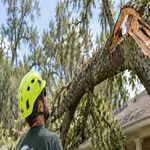
Despite our best efforts to preserve local trees, there are times when removal is the only safe and responsible choice. Leaving a severely compromised tree standing puts your home, family, and surrounding property at risk. Professional teams look for several definitive warning signs during an on-site evaluation to determine if a tree has reached the end of its safe lifespan.
1. Extensive Internal Decay and Fungi
The presence of mushrooms or wood-rotting shelf fungi growing directly from the base of the trunk or out of the root flare is a serious warning sign. These fruiting bodies indicate that fungi are actively feeding on the dead or decaying wood inside the tree. Once internal decay hollows out the structural center of a trunk, the tree loses its mechanical strength and can fail without warning.
2. Large, Deep Trunk Cracks
While surface bark splits can happen naturally as a tree grows, deep vertical cracks that penetrate into the inner wood are a major safety concern. This is especially true if you notice two cracks on opposite sides of the trunk, or a crack that connects directly to a damaged root system. These splits indicate that the trunk is physically separating, creating a high risk of catastrophic failure.
3. Root Incompatibility and Severe Leaning
A tree that develops a sudden, noticeable leak especially if the soil at the base is lifting or cracking indicates that the root system has broken loose from the soil. Additionally, roots that have been heavily damaged by lawn mowers, trenching, or nearby driveway construction cannot provide the leverage needed to keep a mature tree upright during high winds.
4. Severe Understory Exposure and Dieback
When surrounding trees are removed during land development, the remaining trees are suddenly exposed to direct sunlight and wind levels they aren’t adapted to handle. If a tree begins to shed a major portion of its leaves, shows significant crown dieback, or has dead, brittle main branches, its structural integrity is compromised.
The Decision Matrix: Balancing Risk and Target Values
An experienced tree service firm in Acadiana will evaluate more than just the tree itself; they also assess the surrounding environment using a professional risk framework. A structurally compromised tree in the middle of an open field represents a low risk because there is nothing nearby for it to damage. However, that exact same tree standing next to a home or a busy road is considered a critical hazard. By assessing the condition of the tree against the proximity of permanent targets such as houses, garages, utility lines, and driveways, property owners can make practical choices that prioritize safety while avoiding unnecessary tree removal.
Managing the delicate balance between tree preservation and tree removal requires local expertise, specialized equipment, and an honest approach to property care. Hub City Tree & Preservation serves homeowners, commercial property managers, and land developers throughout Lafayette Parish and the wider Acadiana region. With 8 years in business and over 30 years of combined team experience, our licensed, bonded, and insured team offers a wide range of tree services like tree removals, tree trimming, tree pruning & limb removal, 24/7 emergency tree service, stump removal and grinding, and land clearing
We provide clear, flat-rate pricing with a no-surprise guarantee, ensuring the price you approve is the price you pay. Book your Free Estimate today !!
Frequently Asked Questions About Acadiana Tree Preservation & Removal in Acadiana Region
What tree problems are most common in Lafayette Parish?
Properties in Lafayette Parish frequently deal with root instability caused by high soil moisture, canopy overcrowding, and internal wood decay accelerated by our humid climate. Rapidly growing species like pines and old pecans often experience limb drop, while unmanaged trees face elevated risk during hurricane season.
Why do trees in Lafayette fall over even when they look healthy?
Because South Louisiana features high water tables and clay-heavy soils, trees tend to develop shallow, widespread root systems rather than deep taproots. A tree can display a green, healthy canopy but have a compromised root foundation that detaches from rain-saturated soil when subjected to high winds.
When is the best time to trim trees in Lafayette, Louisiana?
The ideal time for routine trimming is during late winter, when trees are dormant. This minimizes sap loss and reduces the risk of pest infestation. However, safety-related pruning, such as removing deadwood or thinning heavy canopies to prepare for storm season, can and should be done at any time of year.
Are live oaks in Lafayette safe to prune?
Yes, live oaks can be safely pruned, but they require a highly precise approach. Pruning should focus on removing deadwood, eliminating crossing branches, and thinning the canopy to reduce wind resistance. Large, structural live oak limbs should only be altered under professional arborist guidance to preserve the tree’s health.
Do you need a permit to remove a tree in Lafayette Parish, Louisiana?
Permit requirements vary depending on your specific municipality, property zone, and whether the tree is designated as a protected or historic species. It is always best to consult with a local, licensed tree service to check current local rules before beginning a major removal project.
How do I know if a tree trunk is hollow or decaying inside?
Signs of internal decay include mushroom growth at the base, deep vertical bark splits, old nesting holes, and soft or oozing wood. Professional tree care teams can perform physical assessments and use specialized tools to check wood density and determine the structural integrity of the trunk.
Can a leaning tree be saved on an Acadiana property?
If a tree has a natural, gradual lean and a stable root system, it can often be preserved. However, if the leaning is sudden, or if the soil around the root flare is lifting and cracking, the root system has failed, and the tree must be removed immediately for safety.
What is crane-assisted tree removal, and when is it used?
Crane-assisted removal uses a specialized crane to hold, cut, and lift large tree sections safely away from a site. This method is used when a hazardous tree is located close to houses, sheds, or power lines, allowing the crew to lower heavy pieces carefully without damaging the surrounding property.
Summary Checklist: When to Call for Removal
| Condition | Risk Level | Recommended Action |
| Sudden Leaning & Soil Lifting | Critical | Call for emergency assessment and crane-assisted removal immediately. |
| Large, Deep Trunk Cracks | High | Schedule an urgent arborist inspection to assess splitting risk. |
| Mushrooms or Fungus at the Base | Moderate to High | Inspect for internal trunk decay and structural core weakness. |
| Dead Canopy Branches & Brittle Tips | Varies | Arrange targeted pruning to optimize canopy airflow and reduce weight. |
| Branches Overhanging Power Lines | High | Contact a licensed, utility-aware tree service for clearance trimming. |
Final Advice
When facing a decision between tree preservation and full tree removal on your Acadiana property, homeowners should evaluate long-term environmental factors rather than opting for reactive solutions. Because South Louisiana’s heavy clay soil and high water tables create shallow root systems, the most valuable first step is to establish whether a distressed tree retains a firm underground anchoring before severe storm fronts arrive.
Do not rely on random canopy cutting or excessive fertilization, which often forces unstable, top-heavy growth; instead, hire a specialized team to lower wind resistance through crown thinning and tactical weight reduction. If an inspection uncovers internal hollows or fungal clusters near the root plate, prioritize immediate hazardous removal to protect nearby assets like roofs and power lines. Hiring a reliable tree service firm in Acadiana will allow you to actively balance targeted maintenance with necessary property protection to seamlessly navigate municipal codes, preserve overall property values, and secure a resilient landscape.
Reviewed by a Certified Arborist
This article has been reviewed by an ISA-certified arborist to ensure all information regarding tree biology, anatomy, and storm safety meets modern industry standards.
Sources and Credible References
- LSU AgCenter: Native Tree Preservation and Pruning Guidelines for Louisiana Homeowners Scientific data regarding structural tree care, local soil impacts, and storm mitigation techniques.
- City of Lafayette Development Code: Article 4 (Landscape, Buffer, and Tree Protection Standards) City regulations dictating protected species parameters, mitigation policies, and urban canopy preservation laws in Lafayette Parish.
- International Society of Arboriculture (ISA): Best Management Practices: Tree Risk Assessment Industry benchmarks detailing the relationship between physical trunk defects, target zones, and threshold risk actions.
- Louisiana Department of Agriculture and Forestry (LDAF): Arborist Licensing Laws and Regulations Public legal criteria for confirming credential verification, safety insurance compliance, and local consumer protection standards.
- University of Florida Institute of Food and Agricultural Sciences (UF/IFAS): Evaluating Wind-Damage Potential of Landscape Trees Comprehensive technical analysis on canopy windload resistance and root failure patterns in soft coastal soils.
- American National Standards Institute (ANSI): ANSI A300 (Part 5: Management of Trees During Site Development) The definitive nationwide standard for protecting tree roots and soils during structural construction.