Key Takeaways
- Tree galls are abnormal growths caused by insects or mites that rarely cause severe long-term harm.
- Fall webworms construct unsightly silk nests on branch tips and can defoliate entire trees if left unchecked.
- Saturated South Louisiana soils and humid conditions can worsen tree stress from pest infestations.
- Targeted pruning, mechanical removal, and biological controls are highly effective management strategies.
- Partnering with a local tree specialist ensures accurate diagnosis and protects valuable landscape assets.
South Louisiana is known for its massive live oaks lining Lafayette neighborhoods to the pecan trees growing throughout Acadiana. But the same warm temperatures, heavy rain, and humid weather that help these trees thrive also create the perfect environment for pests and unusual tree growths. Two of the most common problems homeowners notice are tree galls and fall webworm infestations. At first glance, both can look alarming and make it seem like a tree is in serious trouble. The good news is that they affect trees very differently, and not every issue requires drastic action. Knowing how to spot the difference and understanding when it’s time to step in can help protect the health, safety, and appearance of your landscape.
Understanding Tree Galls: Causes and Identification
Tree galls are distinct, abnormal growths or swellings that develop on a tree’s leaves, twigs, branches, or roots. Seeing these sudden, sometimes grotesque bumps can make a property owner think their tree has developed a severe disease. In reality, most galls are the result of a highly specific relationship between the tree and a variety of tiny organisms.
What Causes Tree Galls?
Tree galls usually form when small insects, mites, bacteria, or fungi irritate new plant growth. In Acadiana, most galls are caused by tiny insects like gall wasps, aphids, midges, or microscopic mites.
As these pests feed on fresh buds or lay eggs in young plant tissue during the spring, they trigger the tree to grow in an unusual way. The tree reacts by creating small swollen growths around the insect or larvae. These growths act like tiny protective shelters, giving the pests a safe place to live and feed while they develop.
Common Types of Galls in South Louisiana
Because Acadiana features a diverse mix of native and ornamental trees, residents frequently encounter several distinct types of galls:
- Leaf Galls: These present as small bumps, warts, or pimples on the upper or lower surfaces of leaves. They are highly common on hackberry trees (hackberry nipple galls) and various oak species. They can turn bright green, yellow, or even red before turning brown.
- Bullet Galls: Found commonly on oak twigs, these are round, woody, marble-sized growths. They start out soft and pinkish-brown before hardening into dark, solid spheres.
- Gouty and Horned Oak Galls: These are large, hard, woody swellings that completely encircle twigs and branches on oak trees. Horned oak galls feature distinct, horn-like projections protruding through the bark surface where adult wasps emerge.
The Impact of Galls on Tree Health
The good news for homeowners is that the vast majority of tree galls are purely cosmetic issues. While a leaf heavily covered in galls looks diseased, the tree’s overall ability to photosynthesize and transport nutrients remains largely uncompromised. Once a gall has formed, the visual blemish is permanent for that growing season, but the leaves will drop naturally in the winter, allowing for a fresh start next spring.
When Do Galls Become Dangerous?
While leaf galls are harmless, woody stem galls require closer monitoring. Gouty and horned oak galls can disrupt the vascular flow of water and nutrients if they encircle small twigs. Over several years, a severe infestation can cause systemic dieback on lower branches.
Furthermore, the weight of massive woody galls can create structural leverage issues on thin branches, rendering them more susceptible to snapping during South Louisiana’s frequent afternoon thunderstorms or high-wind events.
Recognizing Fall Webworms in Acadiana
Unlike galls, which blend quietly into the bark and foliage, fall webworms (Hyphantria cuffea) make their presence known with dramatic visual displays. These native moths are widespread throughout the Acadiana region, and their larval nests are an unmistakable sign of late summer and early autumn.
Identifying the Nests and Caterpillars
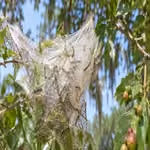
Fall webworms are easily identified by the large, loose webs of silken webbing they spin around the ends of tree branches. It is common to confuse fall webworms with eastern tent caterpillars, but they are behaviorally distinct:
- Eastern Tent Caterpillars: Active exclusively in the spring, building dense webs tucked deep into the main forks and crotches of branches.
- Fall Webworms: Active from mid-summer through autumn, building wide, expansive webs that always surround the leaves on the outermost tips of branches.
Inside these webs, you will find hundreds of pale yellow or greenish caterpillars covered in long, grey-white hairs. As the caterpillars feed, they continuously expand the silk web outward to encompass fresh, un-chewed leaves.
Primary Target Trees
While webworms can feed on over 100 species of deciduous trees, they show a strong preference for specific landscape staples in South Louisiana. Pecan trees are their absolute favorite target, often earning the caterpillars the local nickname of pecan worms. Persimmon, sweetgum, willow, and various fruit trees are also highly susceptible to heavy infestations.
Treating and Managing Webworms
A heavy infestation of fall webworms can strip the leaves off an entire branch line in a matter of days. For large, mature trees, a single season of defoliation is rarely fatal; the tree will typically leaf out normally the following spring. However, repeated defoliation over consecutive years drains the tree’s energy reserves, leaving it vulnerable to secondary wood-boring insects and environmental stress. For young or newly planted trees, webworms can cause severe structural setbacks.
Practical Management Solutions
Managing webworms effectively relies on a mix of physical intervention, biological options, and targeted controls:
- Mechanical Removal: For webs within safe reach from the ground, the easiest remedy is to slide a long pole, broom, or pruner into the web and twist it to tear the nest apart. Opening up the thick silk structure exposes the caterpillars to natural predators like birds, paper wasps, and predatory beetles.
- Targeted Pruning: If the infestation is isolated to a few low-hanging branch tips, cleanly pruning away the infested tips and immersing the nests in a bucket of soapy water is a rapid, non-chemical fix.
- Biological Treatments: Sprays containing Bacillus thuringiensis (Bt) are highly effective when applied directly to the foliage surrounding the nest. Bt is a naturally occurring soil bacterium that targets leaf-chewing caterpillars specifically, leaving beneficial pollinators completely unharmed.
Maintaining Long-Term Tree Resilience
Pests and abnormal growths are drawn to trees that are already under stress. In South Louisiana, our shallow, clay-heavy soils frequently become saturated during heavy rains, starving tree roots of oxygen. When followed by periods of intense summer drought, the root systems struggle, lowering the tree’s natural chemical defenses.
To give your landscape assets the best defense against pests, focus on cultural care. Apply a 2-to-3-inch layer of organic mulch around the root zonekeeping it away from direct contact with the trunk to retain steady moisture and regulate soil temperatures. Ensure your property has functional grading to prevent standing water from pooling around root flares for extended periods. Most importantly, avoid over-fertilizing with high-nitrogen mixtures, as excessive nitrogen triggers sudden flushes of tender leaf growth that act like a magnet for webworms and gall-making insects.
Professional Care for Your Acadiana Landscape
Navigating tree health issues like structural wood galls or expansive canopy webworms requires a careful balance between proactive treatment and preservation. When infestations climb high into mature canopies or start impacting structural stability, DIY methods are no longer safe or effective.Thus, it becomes pivotal to hire a professional tree service firm in Lafayette, LA.
For homeowners across Lafayette and the greater Acadiana region, Hub City Tree & Preservation offers the professional, arborist-guided support needed to keep your property safe and thriving. Operating from Lafayette with over 30 years of combined team experience, our locally owned company specializes in hazardous tree removals, tree trimming, tree pruning & limb removal, 24/7 emergency tree service, stump removal and grinding, and land clearing tailored specifically to South Louisiana conditions.
Whether you are dealing with declining pecan trees, compromised live oaks, or require emergency storm clearing, our licensed, bonded, and fully insured crews use specialized rigging and flat-rate pricing to deliver exceptional results. Protect your landscape investment by booking your free consultation with Hub City Tree & Preservation.
Frequently Asked Questions About Tree Galls in Acadiana Region
What tree problems are most common in Lafayette Parish?
Lafayette properties frequently face challenges stemming from extreme humidity, saturated clay soils, and severe seasonal storms. This environment leads to widespread issues with root rot, wood-decay fungi, leaf blister diseases, and seasonal pest pressures from fall webworms and aphid infestations.
Why do trees in Lafayette fall over even when they look healthy?
Many trees in South Louisiana feature shallow root systems due to high water tables. A tree may look completely green and full from the outside, but internal trunk decay, wood galls on structural junctions, or root rot caused by standing water can cause the root plate to fail suddenly during high winds.
When is the best time to trim trees in Lafayette, Louisiana?
Routine structural trimming and weight reduction are best performed during the dormant winter season (late November through February). Pruning during dormancy minimizes sap bleeding, reduces stress on the tree, and lowers the risk of spreading fungal pathogens that thrive in warm, humid weather.
Are live oaks in Lafayette safe to prune?
Yes, but they require precise, professional techniques. Live oaks should be pruned carefully to maintain their natural structural balance and weight distribution. Removing too much interior growth, a mistake known as lion-tailing, leaves the long limbs vulnerable to breaking under storm winds.
Do you need a permit to remove a tree in Lafayette Parish?
Permit requirements vary depending on your specific municipality, property zone, and whether the tree resides in a public right-of-way or a designated historic/environmental protection zone. It is always recommended to check with local code enforcement or an accredited tree service before initiating a removal.
Summary Checklist: Managing Canopy Pests\
| Condition | Risk Level | Recommended Action |
| Small bumps or warts on leaf surfaces | Low | No treatment needed; leaves drop naturally in winter. |
| Woody galls encircling structural twigs | Moderate | Monitor for limb dieback; prune out affected tips if structural decline occurs. |
| Isolated webworm nests on low branch tips | Moderate | Mechanically tear open webs or prune away affected tips early. |
| Massive webworm nests covering whole mature canopies | High | Apply targeted biological treatments (Bt) to protect long-term energy reserves. |
| Extensive webworm defoliation on young, newly planted trees | High | Request professional evaluation to prevent severe structural stunting. |
Final Advice
When managing tree galls and webworms in your Acadiana landscape, homeowners should treat these issues as warning signs of environmental stress rather than isolated aesthetic problems. Because South Louisiana’s heavy clay soils and intense summer humidity frequently weaken root systems, the most valuable first step is to establish a proactive structural record of your canopy health before pest seasons peak. Do not rely on aggressive chemical sprays that disrupt beneficial local pollinators; instead, use long poles to mechanically open webworm nests early, allowing native birds and wasps to assist with control.
If you encounter large, woody horned galls on your live oaks, avoid aggressive, unguided cutting and instead hire a professional to perform targeted weight-reduction pruning on vulnerable limbs. For young or highly prized pecan and fruit trees, consider applying organic biological controls like Bacillus thuringiensis (Bt) to protect vital foliage without triggering chemical leaf burn. By combining these structural pruning techniques with improved soil drainage and proper root-zone mulching, you can safely navigate seasonal pest cycles, protect your property value, and ensure your mature trees remain highly resilient against severe storm winds.
Reviewed by a Certified Arborist
This article has been reviewed by an ISA-certified arborist to ensure all information regarding tree biology, anatomy, and storm safety meets modern industry standards.
Sources and Credible References
- LSU AgCenter: Commercial Management of Tree Pests in Louisiana (Publication #2542) State-specific field data regarding life cycles, treatment windows, and chemical control efficacy for fall webworms in South Louisiana.
- University of Florida Institute of Food and Agricultural Sciences (UF/IFAS): Insect Galls on Landscape Plants Research detailing the biological interaction between gall-making wasps and native southern oak species.
- Texas A&M AgriLife Extension: The Fall Webworm: Identification and Control Comprehensive guide on the behavioral differences between tent caterpillars and webworms, including mechanical disruption techniques.
- International Society of Arboriculture (ISA): Best Management Practices: Tree Pruning and Health Care National industry guidelines for maintaining canopy airflow and structural integrity against pest pressures.
- USDA Forest Service: Forest Insect & Disease Leaflet: Fall Webworm Historical data regarding long-term host tree impacts and defoliation resilience standards for mature hardwood forests.
- Louisiana Department of Agriculture and Forestry (LDAF): Urban Forestry and Tree Care Standards Regulatory resources regarding local arborist licensing, tree safety, and pest quarantine updates across Louisiana parishes.