Key Takeaways:
- Storm Wind Resistance: Proper pruning in South Louisiana opens up dense canopies, allowing heavy hurricane winds to pass through safely without toppling the tree.
- The Three-Cut Method: Removing large limbs requires three specific cuts to stop heavy branches from stripping the bark and leaving deep, unhealable trunk wounds.
- Targeted Canopy Techniques: Methods like crown thinning, cleaning, reduction, and raising address the unique growth habits of native species like live oaks and bald cypress.
-
- Strict Wound Prevention: Clean cuts made just outside the branch collar allow local trees to naturally seal off wounds and resist wood-rotting tropical fungi.
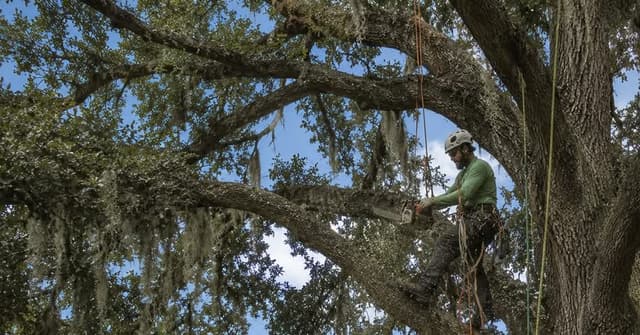
- Professional Execution: Utilizing a qualified team ensures the use of specialized rigging, ground protection mats, and safe climbing practices near homes.
The natural beauty of the Acadiana region relies heavily on its unique, sprawling trees. From massive legacy live oaks to towering bald cypresses, our local canopy defines the landscape. However, growing trees in South Louisiana comes with distinct environmental pressures. Heavy summer humidity, dense clay soils, and the annual threat of tropical storms create a demanding environment for property owners.
In our region, tree pruning and limb removal are critical safety measures rather than cosmetic chores. Overgrown branches turn into massive hazards when hurricane winds strike. At the same time, improper cutting methods introduce destructive rot and pests that spread quickly in our warm, damp climate.
To keep local properties safe and protect our natural assets, tree work must follow established arboricultural science. Using the right technique for the right branch ensures that the tree stays stable, healthy, and capable of standing for decades to come.
Core Pruning Techniques Tailored for Local Species
Tree pruning is never a one-size-fits-all job. Different structural issues require different cutting strategies. Arborists use four primary methods to manage tree canopies safely.
Crown Thinning
Species like the live oak naturally grow incredibly dense canopies. While this provides excellent shade, a thick canopy acts like a massive canvas sail during a storm. Crown thinning removes small, weak, or closely competing branches throughout the outer canopy. This process opens up the middle of the tree so that heavy storm winds can blow straight through the branches instead of pushing the whole tree over. Thinning also allows sunlight and air to reach the inner leaves, reducing fungal growth.
Crown Raising
Low-hanging limbs often block driveways, scrape against roofs, or get in the way of sidewalk traffic. Crown raising removes the lowest branches of the tree to create clear vertical space underneath. This is especially important for street clearance in residential neighborhoods and for preventing low limbs from trapping moisture against the side of a house or garage.
Crown Reduction
When a tree grows too large for its surroundings or begins to crowd nearby power lines and structures, crown reduction is used to decrease its overall height or spread. This technique shortens major limbs by cutting them back to lateral branches that are strong enough to take over the terminal growth. This preserves the natural form of the tree while keeping its size manageable.
The Danger of “Topping” and Cheap Cuts
It is vital to separate proper crown reduction from the destructive practice known as “tree topping.” Topping involves cutting the main upper limbs straight across, leaving ugly, flat stubs. This is often done by uncertified workers offering cheap prices, but it causes severe, long-term damage.
Topping shocks the tree by removing its primary food source. In response, the tree panics and rapidly pushes out clusters of weak, vertical shoots called water sprouts. These sprouts grow fast, but they are weakly attached to the decaying stub. During the next high-wind event, these poorly attached limbs snap off easily, turning into dangerous projectiles. Additionally, the flat, open wounds left by topping cannot heal, allowing internal rot to destroy the tree from the inside out.
Structural Limb Removal: The Three-Cut Method
Removing a large, heavy branch requires a precise technique to prevent serious injury to the tree. Simply cutting straight through a limb from the top down can cause the branch to snap under its own weight right before the cut is finished. When it snaps, it often tears a long strip of bark down the side of the trunk, leaving a massive, unhealable wound. To prevent this, tree service firms use a strategy known as the three-cut method.
The First Cut: The Undercut
The first cut is made on the underside of the limb, about 12 to 18 inches away from the main trunk. This cut only goes about one-third of the way through the branch. The purpose of this undercut is to act as a stopper. If the branch breaks early during the next step, the bark will only tear up to this line, leaving the main trunk perfectly safe.
The Second Cut: The Top Cut
The second cut is made from the top of the branch, a few inches further out than the undercut. As this cut goes deeper, the weight of the branch will cause it to snap cleanly between the two cuts. This removes the vast majority of the weight and bulk of the limb, leaving behind a short, manageable stub.
The Third Cut: The Final Collar Cut
With the heavy weight gone, the final cut can be made safely and precisely. This cut removes the remaining stub right outside the branch collar. The branch collar is the swollen area where the limb meets the trunk.
It is vital to leave the collar intact. The collar contains specialized cells that heal the wound naturally by growing a protective layer of wood over the cut. Cutting too close to the trunk known as a flush cut destroys these cells and prevents the tree from sealing itself, opening the door for rot and disease.
Managing large trees requires specialized equipment and training. Dropping heavy limbs without the proper tools can result in severe property damage or dangerous accidents. Hub City Tree & Preservation provides hazardous tree removals, tree trimming, tree pruning & limb removal, 24/7 emergency tree service, stump removal and grinding, and land clearing tailored specifically to South Louisiana conditions.
Our crew handles jobs of all sizes using proven techniques that protect the long-term health of your landscape. Do not wait for a major storm to cause a crisis. Safeguard your home and family today by calling Hub City Tree & Preservation at (337) 717-1771 for a professional, on-site tree evaluation.
Frequently Asked Questions About Tree Pruning and Limb Removal in the Acadiana Region
When is the best time to prune trees in Acadiana?
Late winter is ideal because trees are dormant, reducing stress and preventing pests or fungi from invading fresh cuts. However, storm-damaged branches should be removed immediately.
Can I cut large limbs off my trees myself?
Small, low branches are fine for homeowners, but high limbs require professional climbing gear, commercial chainsaws, and strict safety training to prevent injury or property damage.
What is the difference between trimming and pruning
Trimming is done for cosmetic shaping on the outside of hedges or bushes. Pruning is a precise, health-based practice focused on a tree’s biological strength and structural integrity.
Is it safe to use climbing spikes on a living tree?
No. Climbing spikes punch holes deep into the living tissue. In our warm, damp climate, these holes become immediate entry points for wood rot, diseases, and insects.
How does crown thinning protect a home from hurricanes?
It reduces the “sail effect” by opening up the canopy, letting heavy winds pass freely through the tree instead of catching the foliage and toppling the entire trunk.
Should I apply tar or wound paint to a fresh cut?
No. Scientific research shows that wound paints and tars trap moisture against the open wood, which speeds up fungal growth. It is best to let the tree seal naturally.
How can I tell if a large branch is dead?
Dead branches completely lack leaves and buds during spring and summer, and the bark may peel away. A light scratch on a twig will show dry brown wood instead of moist green tissue.
What is a flush cut and why is it bad?
A flush cut is a branch cut made flat against the main trunk. This removes the branch collar, destroying the tree’s natural healing mechanism and causing permanent internal rot.
Summary Checklist: When to Call for Removal
| Condition | Risk Level | Recommended Action |
| Sudden Leaning | Critical | Call for an emergency tree assessment immediately. |
| Large Trunk Cracks | High | Schedule a professional inspection as soon as possible. |
| Mushrooms or Fungus at the Base | Moderate to High | Inspect the tree for internal decay and structural instability. |
| Dead or Bare Branches | Varies | Consult an arborist to determine whether pruning or removal is necessary. |
| Overhanging Power Lines | High | Contact a licensed tree service and utility provider for safe clearance. |
Final Advice
Taking care of large trees requires a solid understanding of branch structure, tree biology, and the specific weather patterns of our area. Using incorrect cutting methods like topping or making flush cuts will permanently weaken your trees and elevate your property’s risk during hurricane season. If you want to protect your home and ensure your landscape stays healthy, it is smart to rely on a professional tree service in the Acadiana region that uses proven structural pruning and crown thinning techniques.
Regular upkeep not only protects the structural integrity of your legacy oaks but also saves money by preventing emergency storm damage down the road. If you notice structural issues like sudden leaning, deep bark cracks, or hollow sections, do not take unnecessary personal risks trying to clear large limbs yourself. Instead, schedule a detailed assessment with an arborist who has the right rigging gear and experience to safely handle hazardous branches. Taking a proactive approach is the best way to safeguard your property and keep your native trees beautiful for many generations to come. For expert tree care and professional service in the Acadiana Region, Book Your Free Estimate now with Hub City & Preservation by calling (337) 717-1771.